

Safeguard on social
Every post we have published on our social profiles, newest first, with the copy exactly as posted. Each card links to the original post.
Latest posts
RSS feed XVideo
A Zero Day has no CVE, so a scanner that only matches public feeds has nothing to match. Run a loop instead of a ticket queue: detect, decide, fix, source a safe component, verify, prevent. People set the rules. https://t.co/PMf9ymrLTq https://t.co/46FxomXyNS
Read the full postHide the full post
A Zero Day has no CVE, so a scanner that only matches public feeds has nothing to match. Run a loop instead of a ticket queue: detect, decide, fix, source a safe component, verify, prevent. People set the rules. https://t.co/PMf9ymrLTq https://t.co/46FxomXyNS
 TikTokVideo
A Zero Day has no CVE, so your scanner has nothing to match. This is the loop that handles it. #appsec #cybersecurity #zeroday #devsecops #softwareengineering
 LinkedInVideo
A Zero Day has no CVE. So a scanner that only matches public feeds has nothing to match. There is no advisory and usually no fix. CISA's KEV catalog can't list it either, because KEV needs a CVE ID first. Waiting on the feed is the one plan that cannot work here. What works is a…
Read the full postHide the full post
A Zero Day has no CVE. So a scanner that only matches public feeds has nothing to match. There is no advisory and usually no fix. CISA's KEV catalog can't list it either, because KEV needs a CVE ID first. Waiting on the feed is the one plan that cannot work here. What works is a loop that does its own hand offs, with no ticket queue in the middle: Detect: known and novel flaws, in your code and in your dependencies. Decide: rank by what your application actually calls, then apply policy. Fix: a tested pull request, not a ticket. Source: move to a safe version of the component. Verify: rescan the merged commit. If the finding is still there, it isn't fixed. Prevent: stop that class of flaw in the IDE, at install time and in CI. People stay in charge. They decide which classes of fix may run without review and who can grant an exception, and for how long. Autonomy is earned one class of fix at a time. Suggest only first. Then pull requests that open automatically and a person merges. Then your own repository rules for the safest class. In Safeguard, autonomous remediation ships switched off until an admin turns it on. The full guide maps the loop to NIST SSDF and includes a decision table and a 30/60/90 day rollout. https://lnkd.in/g28ciUMe #AppSec #SoftwareSupplyChain #VulnerabilityManagement #DevSecOps
 Instagram
OpenCode Console Breach: Rotate Your OpenAI, Anthropic and Google Keys https://safeguard.sh/resources/blog/opencode-console-breach-provider-api-keys
Read the full postHide the full post
OpenCode Console Breach: Rotate Your OpenAI, Anthropic and Google Keys https://safeguard.sh/resources/blog/opencode-console-breach-provider-api-keys
- YouTubeVideo
OpenCode Console Breach: Rotate Your OpenAI, Anthropic and Google Keys https://na2.hubs.ly/H08s4tX0
Read the full postHide the full post
OpenCode Console Breach: Rotate Your OpenAI, Anthropic and Google Keys https://na2.hubs.ly/H08s4tX0
- Facebook
OpenCode Console Breach: Rotate Your OpenAI, Anthropic and Google Keys
- LinkedIn
OpenCode Console Breach: Rotate Your OpenAI, Anthropic and Google Keys https://lnkd.in/g7a7fERj
Read the full postHide the full post
OpenCode Console Breach: Rotate Your OpenAI, Anthropic and Google Keys https://lnkd.in/g7a7fERj
- X
OpenCode Console Breach: Rotate Your OpenAI, Anthropic and Google Keys https://t.co/y9tLolXcjN
Read the full postHide the full post
OpenCode Console Breach: Rotate Your OpenAI, Anthropic and Google Keys https://t.co/y9tLolXcjN
 YouTubeVideo
 LinkedIn
Most data doesn't leak in some dramatic hack scene. It leaks quietly, through a vulnerability nobody was watching for yet. Zero-day discovery runs its own research pipeline to catch these before they're public knowledge, so the window where you're exposed gets a lot smaller. See…
Read the full postHide the full post
Most data doesn't leak in some dramatic hack scene. It leaks quietly, through a vulnerability nobody was watching for yet. Zero-day discovery runs its own research pipeline to catch these before they're public knowledge, so the window where you're exposed gets a lot smaller. See how it works.
- Instagram
Most data doesn't leak in some dramatic hack scene. It leaks quietly, through a vulnerability nobody was watching for yet. Zero-day discovery runs its own research pipeline to catch these before they're public knowledge, so the window where you're exposed gets a lot smaller. See…
Read the full postHide the full post
Most data doesn't leak in some dramatic hack scene. It leaks quietly, through a vulnerability nobody was watching for yet. Zero-day discovery runs its own research pipeline to catch these before they're public knowledge, so the window where you're exposed gets a lot smaller. See how it works.
- Facebook
Most data doesn't leak in some dramatic hack scene. It leaks quietly, through a vulnerability nobody was watching for yet. Zero-day discovery runs its own research pipeline to catch these before they're public knowledge, so the window where you're exposed gets a lot smaller. See…
Read the full postHide the full post
Most data doesn't leak in some dramatic hack scene. It leaks quietly, through a vulnerability nobody was watching for yet. Zero-day discovery runs its own research pipeline to catch these before they're public knowledge, so the window where you're exposed gets a lot smaller. See how it works.
- X
Most data doesn't leak in some dramatic hack scene. It leaks quietly, through a vulnerability nobody was watching for yet. Zero-day discovery runs its own research pipeline to catch these before they're public knowledge, so the window where you're exposed gets a lot smaller. htt…
Read the full postHide the full post
Most data doesn't leak in some dramatic hack scene. It leaks quietly, through a vulnerability nobody was watching for yet. Zero-day discovery runs its own research pipeline to catch these before they're public knowledge, so the window where you're exposed gets a lot smaller. https://t.co/o2hjBVQprQ
 LinkedIn
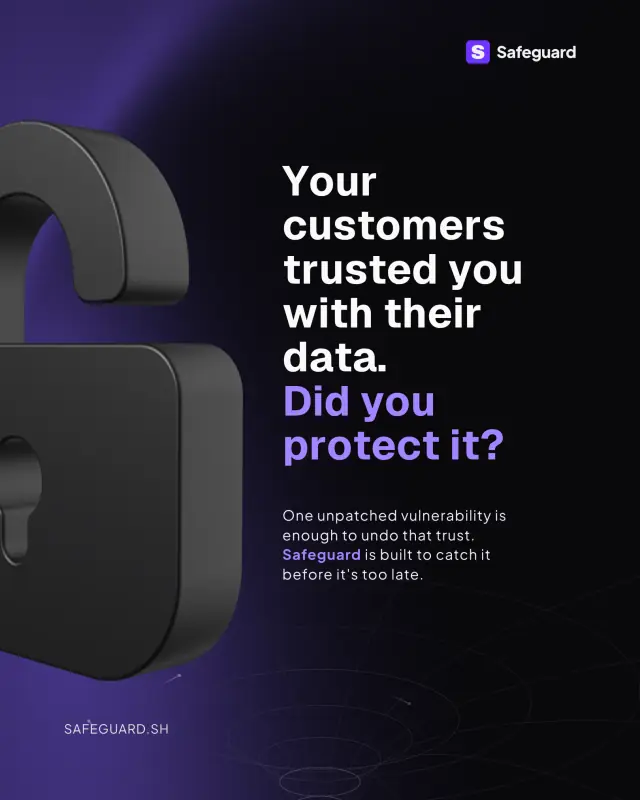
Customers don't see your infrastructure. They just see whether their information stayed theirs. Catching a vulnerability before it's exploited isn't just a technical task, it's what keeps that trust intact. See how early detection protects it.
Read the full postHide the full post
Customers don't see your infrastructure. They just see whether their information stayed theirs. Catching a vulnerability before it's exploited isn't just a technical task, it's what keeps that trust intact. See how early detection protects it.
- X
Customers don't see your infrastructure. They just see whether their information stayed theirs. Catching a vulnerability before it's exploited isn't just a technical task, it's what keeps that trust intact. See how early detection protects it. https://t.co/sKwsjYPi4U
Read the full postHide the full post
Customers don't see your infrastructure. They just see whether their information stayed theirs. Catching a vulnerability before it's exploited isn't just a technical task, it's what keeps that trust intact. See how early detection protects it. https://t.co/sKwsjYPi4U
- X
CI/CD is the most dangerous trust boundary in most orgs and barely shows up in security reviews. it runs as a privileged process, fetches dependencies at build time with no runtime check, and has write access to production. a malicious package there isn't a dev machine problem.
- X
dependency confusion works because private package names are predictable. typosquatting works because attention is finite. neither requires a sophisticated attacker. a weekend and a registry account is enough. the bar to compromise a build pipeline is lower than most teams think.
- X
the SBOM gives you a receipt. it doesn't tell you if what you bought is safe. knowing you have lodash 4.17.21 is useful. knowing whether that specific build of lodash was tampered with in the registry before you pulled it is a different question entirely, and most SBOMs don't
Read the full postHide the full post
the SBOM gives you a receipt. it doesn't tell you if what you bought is safe. knowing you have lodash 4.17.21 is useful. knowing whether that specific build of lodash was tampered with in the registry before you pulled it is a different question entirely, and most SBOMs don't
- X
vibe coding didn't create the supply chain problem. it just removed the last human who was skimming the dependency list before hitting install. that human wasn't doing a great job. but they were doing something. now there's nobody.
Read the full postHide the full post
vibe coding didn't create the supply chain problem. it just removed the last human who was skimming the dependency list before hitting install. that human wasn't doing a great job. but they were doing something. now there's nobody.
- X
most orgs are solving the wrong supply chain problem. they scan for known CVEs. they block packages on the NIST list. they feel covered. but the actual attacks in 2026 don't use known CVEs. they use packages with no CVE, no history, and clean provenance. a fresh malicious
Read the full postHide the full post
most orgs are solving the wrong supply chain problem. they scan for known CVEs. they block packages on the NIST list. they feel covered. but the actual attacks in 2026 don't use known CVEs. they use packages with no CVE, no history, and clean provenance. a fresh malicious
- X
Safeguard Superintelligence Lab https://t.co/VzDuqd35g9
Read the full postHide the full post
Safeguard Superintelligence Lab https://t.co/VzDuqd35g9
 LinkedInVideo
Every dev team knows the feeling. The security scan comes back with thousands of issues and nobody knows where to start. Here's the thing: most of those issues sit in code your app never touches. Safeguard scans your code and dependencies, works out what's actually reachable, an…
Read the full postHide the full post
Every dev team knows the feeling. The security scan comes back with thousands of issues and nobody knows where to start. Here's the thing: most of those issues sit in code your app never touches. Safeguard scans your code and dependencies, works out what's actually reachable, and opens a tested fix for the ones that matter. Your team just reviews and merges. Less noise. Real fixes. 🔒 Link in bio to see it run on your code. #AppSec #DevSecOps #CyberSecurity #SoftwareDevelopment #DevLife #CodeSecurity #TechStartup #Developers
- InstagramVideo
Every dev team knows the feeling. The security scan comes back with thousands of issues and nobody knows where to start. Here's the thing: most of those issues sit in code your app never touches. Safeguard scans your code and dependencies, works out what's actually reachable, an…
Read the full postHide the full post
Every dev team knows the feeling. The security scan comes back with thousands of issues and nobody knows where to start. Here's the thing: most of those issues sit in code your app never touches. Safeguard scans your code and dependencies, works out what's actually reachable, and opens a tested fix for the ones that matter. Your team just reviews and merges. Less noise. Real fixes. 🔒 Link in bio to see it run on your code. #AppSec #DevSecOps #CyberSecurity #SoftwareDevelopment #DevLife #CodeSecurity #TechStartup #Developers
- XVideo
Every dev team knows the feeling. The security scan comes back with thousands of issues and nobody knows where to start. Here's the thing: most of those issues sit in code your app never touches. Safeguard scans your code and dependencies, works out what's actually reachable, an…
Read the full postHide the full post
Every dev team knows the feeling. The security scan comes back with thousands of issues and nobody knows where to start. Here's the thing: most of those issues sit in code your app never touches. Safeguard scans your code and dependencies, works out what's actually reachable, and https://t.co/XeUO6Vk6c4
Follow Safeguard

Self-healing security runs on Safeguard.
Your first fix PR is minutes away.
No sales call required, even your agent can complete the purchase over MCP.